Most people who decide to stop smoking do so quietly, almost privately. They set a date, stock up on patches or gum, and white-knuckle their way through the first few days hoping willpower alone will carry them through. For some, it does. But for the majority, the pull of habit, stress, and social cues eventually wins out — and the cycle starts again. That experience is exactly what Vibrant Health Advocates – Marenne was set up to interrupt.
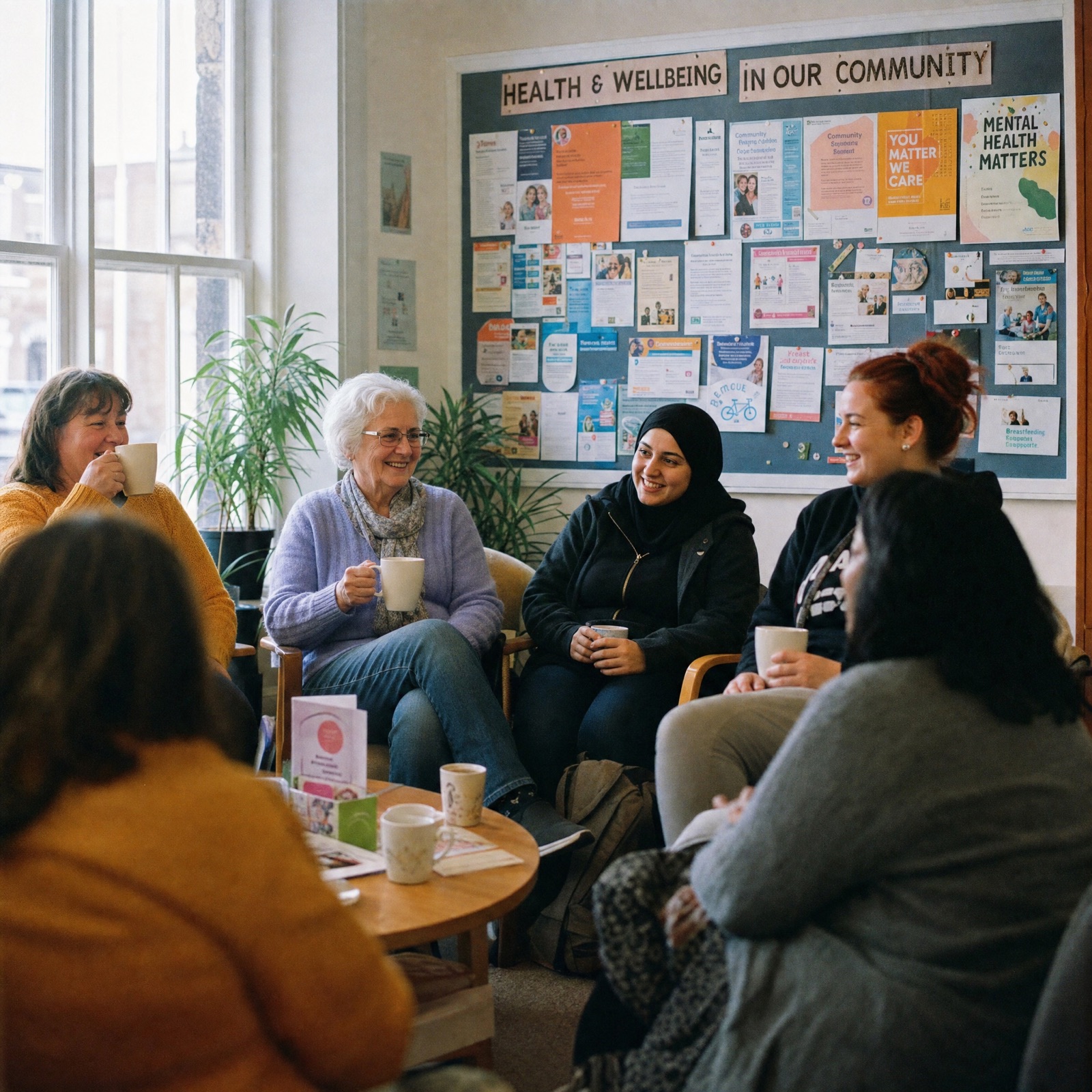
Our peer cessation groups here in Linlithgow operate on a simple but powerful premise: when you sit in a room with other people who are going through exactly what you are going through, something shifts. You stop feeling like a failure every time a craving hits. You start understanding that cravings are biological, temporary, and survivable — and you believe it more readily when you hear it from someone who quit six weeks ago than from a pamphlet.
The evidence strongly supports this approach. Research published by the Cochrane Collaboration has consistently found that group-based stop-smoking programmes produce significantly higher long-term quit rates than self-help methods or even individual counselling alone. The combination of accurate clinical information and sustained peer encouragement appears to activate something that neither element achieves on its own. People stay accountable, feel less isolated, and develop practical coping strategies they can actually use.
In our groups, sessions are guided by a trained stop-smoking advisor who brings structured, NHS-aligned information about nicotine dependence, cessation aids, and managing withdrawal. But the real texture of each meeting comes from the participants themselves — the person who found that a ten-minute walk broke the evening craving cycle, the person who admitted they nearly caved on a difficult Thursday but rang someone from the group instead, the person who arrived anxious and left with a concrete plan for the following week.
Linlithgow is a tight-knit community, and that matters enormously in this context. People know each other, or know someone who knows someone. That social fabric becomes a genuine resource when you are trying to change a deeply ingrained habit. Running into a fellow group member in the Co-op or on the towpath beside the loch is not an embarrassment — it is a quiet reminder that you are not doing this alone.
If you have tried to quit before and not managed to stay quit, that history is not a reason to give up. It is, in fact, exactly the kind of experience our groups are designed to meet. Every person who walks through the door has a story, and most of those stories include at least one previous attempt. What changes here is not willpower — it is the environment around your willpower. Come and see what a difference that makes.
Want to experience this yourself?
Our peer cessation groups meet weekly in Linlithgow. There is no waiting list and no commitment required in getting in touch. Contact us to find out about current session times.